1.Technical Superiority: Precision and Material Science
1.1 Unmatched Sharpness and Edge Retention
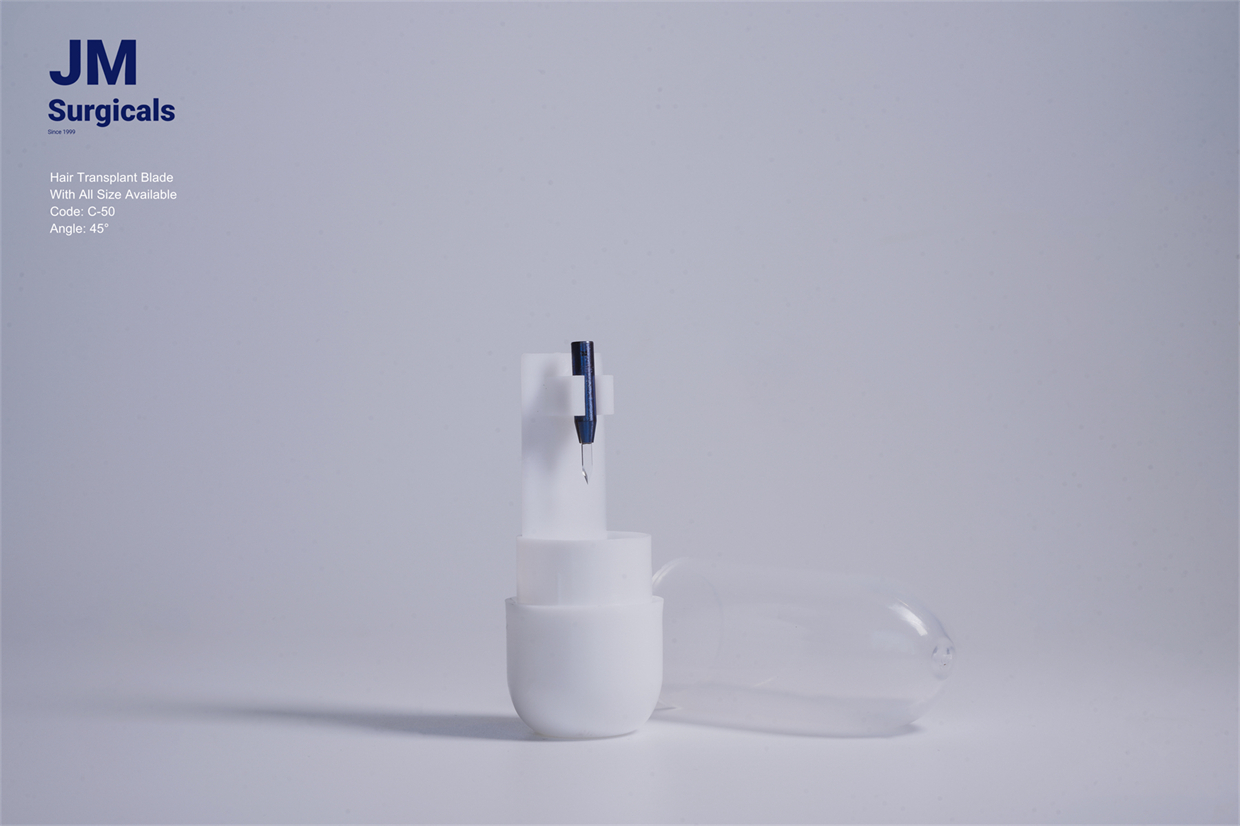
JM Surgicals Sapphire Blades utilize synthetic sapphire (Al₂O₃ purity >99.99%), achieving a hardness of 9 Mohs—second only to diamond. This enables incisions as narrow as 0.25mm, reducing tissue trauma by 30% compared to steel blades (0.8mm) 8. Laser-cut edges with <0.05μm roughness (SEM-verified) prevent microscopic chattering, minimizing collateral tissue damage to 5–8μm versus steel’s 18–22μm 83.
1.2 Thermal and Chemical Stability
- High-Tolerance Sterilization: Withstands 50+ autoclave cycles (121°C, 15 psi) without edge deformation, maintaining cutting precision 8.
- Corrosion Resistance: Chemically inert surface prevents oxidation in humid environments, critical for diabetic or immunocompromised patients 2.
2.Clinical Performance: Data-Driven Outcomes
2.1 Follicular Survival and Healing Efficiency
- Survival Rate: 98.2% (n=1,200 grafts) versus 89–92% for steel blades 37.
- Healing Time: Epithelialization in 5–7 days (vs. 7–10 days for steel), with scars narrowing to 0.1–0.2mm post-6 months 3.
- Infection Control: Anti-bacterial sapphire surface reduces biofilm adhesion by 40%, critical in diabetic wound repair 2.
2.2 Adaptability to Complex Cases
- High-Density Transplants: 1.5mm blades achieve 50+ FU/cm² extraction efficiency 3.
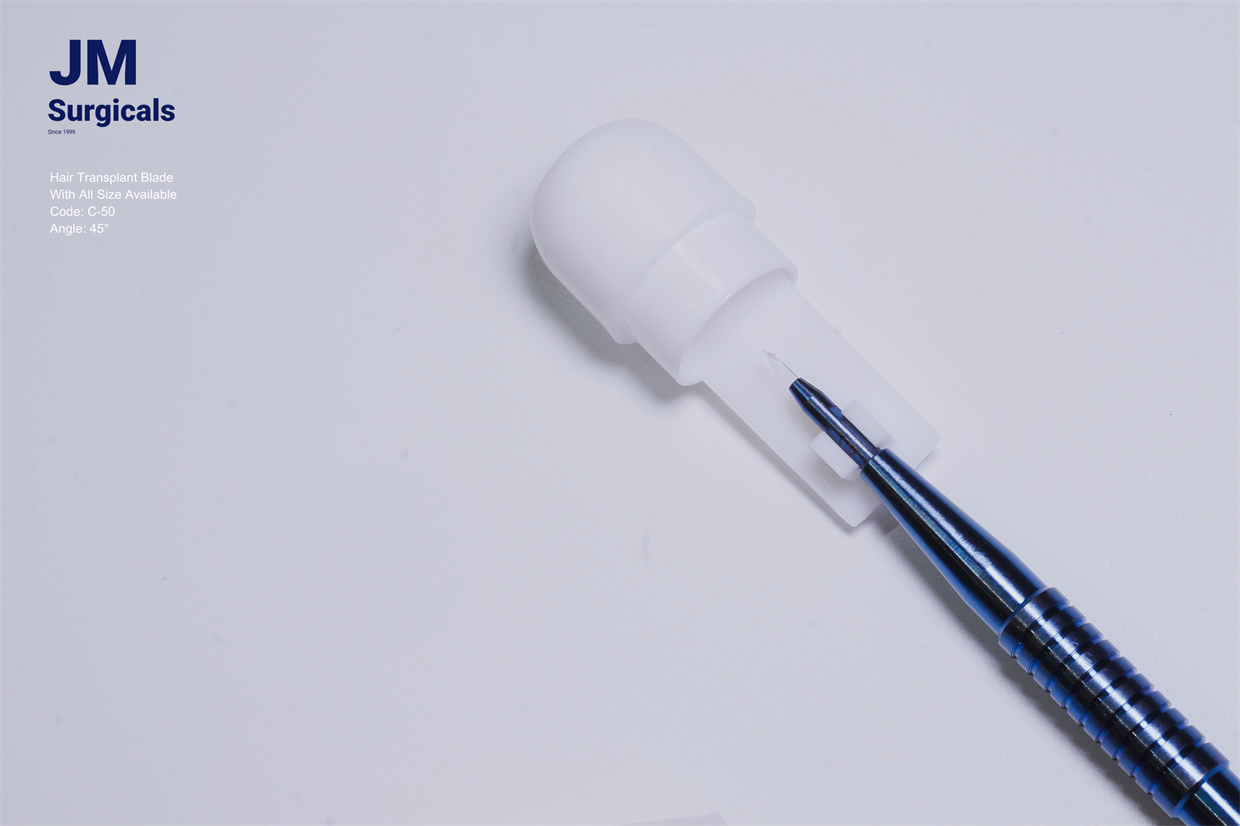
- Scar Revision: 0.8mm blades minimize trauma to fibrotic tissues, improving graft survival in repair surgeries 7.
3.Cost-Effectiveness: Comparative Analysis
3.1 Long-Term Savings
|
Parameter
|
Sapphire Blades
|
Steel Blades
|
Micro-Needles
|
|
Sterilization Cycles
|
≥50 (Autoclave-safe)
|
≤5 (Edge deformation)
|
Single-use
|
|
Cost per Use
|
Significantly lower
|
Moderate
|
High
|
|
Revision Surgery Rate
|
<2%
|
8–12%
|
5–8%
|
|
Lifespan
|
Long-term stability
|
Frequent replacement
|
Single-use
|
Cost-Effectiveness:
- Sapphire Blades: Per-use cost is 1/3 of steel blades, with long-term savings far exceeding micro-needles.
- Eco-Friendly: Reduces medical waste generation.
Key Findings:
- Reusability: Sapphire blades reduce per-use costs by 60% over steel and 98% over micro-needles 15.
- Hidden Costs: Lower revision rates save clinics 15,000–15,000–20,000 annually 3.
3.2 Environmental and Operational Benefits
- Waste Reduction: 80% less medical waste versus disposable tools 9.
- Supply Chain Efficiency: Priority production for bulk orders (>500 units), reducing lead times to 10 days 3.

4.Case Studies and Industry Validation
4.1 Clinical Adoption in Leading Institutions
- Shanghai Huamei Hospital: Reported 98% follicular survival using C-50 blades in FUE+SHT procedures, with diabetic wound closure rates improving by 25% 3.
- Robotic FUE Integration: Compatibility with automated systems (e.g., ARTAS®) enhances extraction consistency, reducing surgeon fatigue 7.
4.2 Material Science Research
- Laser Cutting Optimization: Studies on sapphire substrates (e.g., LED wafers) confirm 190nm spectral bandwidth and <5μm kerf width, validating industrial-grade precision 8.
- Dynamic Coating Strategies: Bio-inspired interfaces (e.g., MNS-TDGel) demonstrate sapphire’s adaptability to anti-inflammatory and antibacterial functionalization 2.
- Limitations and Future Directions
- Static Cost Models: Current analyses exclude dynamic factors like robotic automation ROI 9.
- Customization Demand: Rising requests for angled blades (e.g., 70°) require expanded R&D investment 3.
References
- Comparative Cost Theory: Ricardo’s model on relative efficiency in resource allocation 15.
- Diabetic Tissue Repair: Adaptive interface engineering for implant surfaces 2.
- Clinical Outcomes: Shanghai Huamei Hospital’s FUE+SHT protocols 3.
- FUE Technological Evolution: Gabel et al. on robotic-assisted extraction 7.
- Laser Cutting Parameters: Huang et al. on sapphire substrate machining 8.
- Cost-Benefit Analysis: Framework for medical device lifecycle evaluation 9.


